

 Italiano
 Français
 Español
 Deutsch
CTS FOCUS - Here Comes the New Film!

The new EVA adhesive film, designed and produced by C.T.S. srl, is finally available.
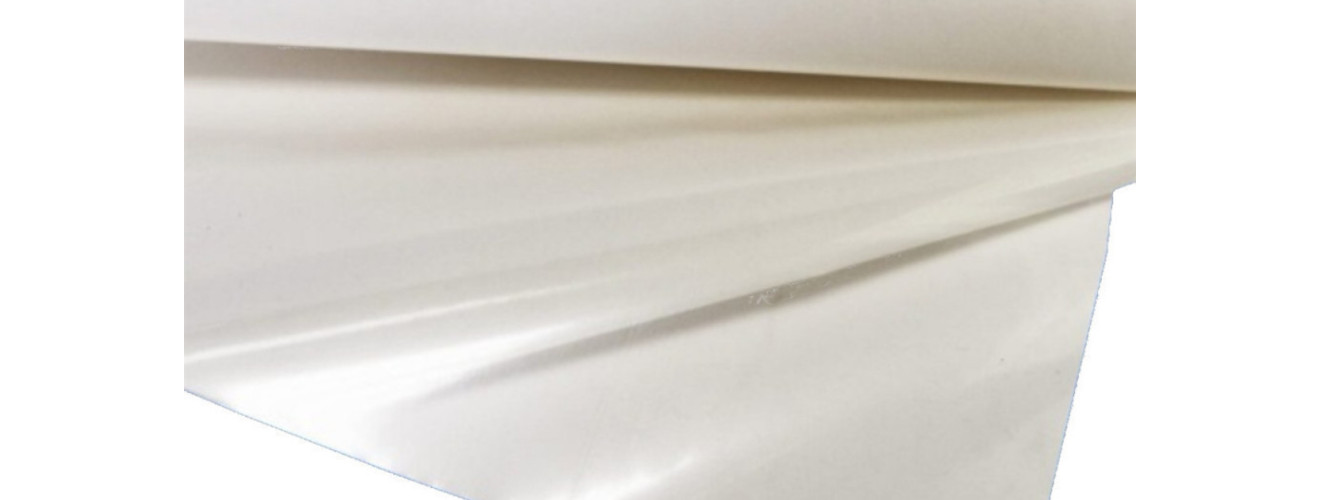
The new EVA FILM 65 is a dry film adhesive, 65 microns thick, originally developed for lining paintings on canvas, but suitable for any application where the use of solvents must be avoided during adhesion processes.
The film is made from a blend of ethylene-vinyl acetate resins, urea-aldehyde, and microcrystalline wax, materials extremely resistant to yellowing and crosslinking. Thanks to these properties, the adhesive remains reversible even after decades. Reversibility can be achieved using polar solvents or heat.
EVA FILM 65 addresses the need for stability and, in particular, solves the yellowing issues observed in the past. As is well known, the discontinuation of the ketone resin Laropal K80 led to modifications of many formulations that used it, either alone or in combination with other resins, such as in Beva 371. The only alternative ketone resin initially had a yellow hue, and in order to maintain the adhesive properties of the mixture, Beva 371 was formulated with a slight straw color.
Since 2017, this ketone resin has been replaced with a perfectly transparent urea-aldehyde resin, and therefore Beva 371 is now colorless again. The new EVA FILM 65 is also based on this urea-aldehyde resin, added to the classic ethylene-vinyl acetate and paraffin blend.
Using special laminators, the adhesive mixture is extruded onto a support film (37-micron silicone-coated polyester), which is then laminated with a second protective film (23-micron silicone-coated polyester). This creates a perfectly transparent “sandwich” that simplifies positioning and cutting.
As with other classic adhesive films, following a few simple rules ensures optimal adhesion:
• Once the area to be treated is identified and precisely cut, remove the polyester protective sheet: the EVA FILM 65 layer remains attached to the polyester support film (the adhesive side feels soft to the touch and appears slightly opaque).
• Place EVA FILM 65 onto the lining canvas (or any other chosen material) and apply heat and pressure to transfer the adhesive film, using two methods:
1. With a hot table/low pressure, raise the temperature to approximately 65°C, then allow to cool while applying light pressure, using vacuum or another method.
2. With an iron, ensure the plate reaches approximately 65°C, then press immediately until completely cooled.
• Remove the polyester support film. The adhesive layer will remain on the lining canvas, ready for the lining process.
The EVA FILM 65 layer can be reactivated (made sticky again) using three methods: solvents, heat, or a combination of both.
1. Many solvents can be used, from polar solvents like acetone and acetates, to aromatics, and hydrocarbons such as cyclohexane or white spirit. They are applied by spray or brush onto the film surface, and activation is checked by hand. Activation times vary depending on the solvent.
2. The film becomes sticky at around 65°C, exceeding the wax melting point and softening temperatures of some polymer components. Using only heat requires no solvents, avoiding any hazardous fumes for the restorer. This method is also suitable for sensitive artifacts and prevents stains or diffusion effects.
3. The film can also be reactivated at temperatures below 65°C using both heat and solvents. After transferring the film onto the lining canvas, a slow-evaporating solvent such as white spirit is applied. After a few minutes, the film becomes sticky like a contact adhesive and can be used at approximately 45°C. After further cooling and solvent evaporation, a strong bond forms. Minimal pressure should be applied since simultaneous solvent and heat may soften the paint layer, risking deformation.
Important! Temperatures above 70°C may damage the paint layer and over-soften the film, allowing it to penetrate the canvas and reach the paint, altering color. Use an infrared thermometer (e.g., Mod. 652) if a hot table/low-pressure setup is unavailable. Irons can reach 90°C, causing a “plasticized” effect previously attributed to the product rather than user error.
• In general, adhesion strength increases with temperature.
• Cooling (or complete drying when reactivated with solvent) must always occur under pressure. Removing pressure while the film is warm or solvent-wet may cause delamination or blistering; in such cases, repeat the procedure.
• EVA FILM 65 comes in 1-meter height; larger sizes can be achieved by joining another piece with adhesive tape on the polyester support film. Once transferred, adhesion will be uniform across the joint.
• For transparent lining, use EVA FILM 65 with Origam polyester canvas or Linon veil.
• To remove linings using EVA FILM 65, various solvents can be used, from acetone to non-polar solvents like white spirit, ligroin, and cyclohexane. Test first to ensure no damage to the paint layer. Solvents swell the film, making it easy to remove without contaminating or staining absorbent material. If solvents are not desired, removal can be achieved with heat at 55–60°C.



.png)

.jpg)

